Many friends often ask me about the differences between DTF (Direct to Film) and DTG (Direct to Garment) and their future trends. Most importantly, how should we choose…?
Why has DTF printing technology revolutionized the industry?
The evolution from Direct Garment Printing (DTG) to Direct Film Printing (DTF) represents one of the most significant advancements in the apparel finishing industry. In hindsight, DTF makes DTG seem like a transitional technology—powerful at the time, but ultimately limited by complexity, cost, and inconsistencies.
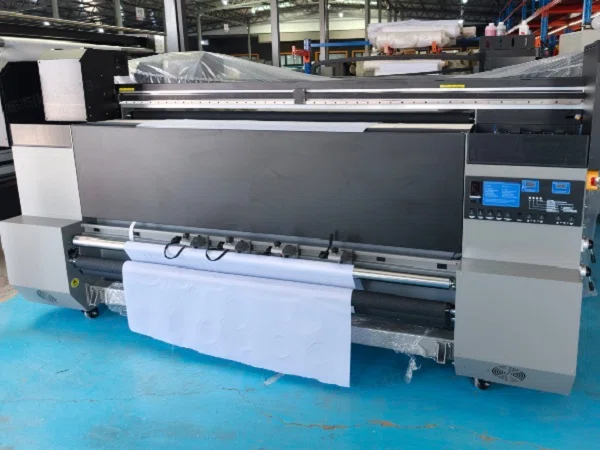
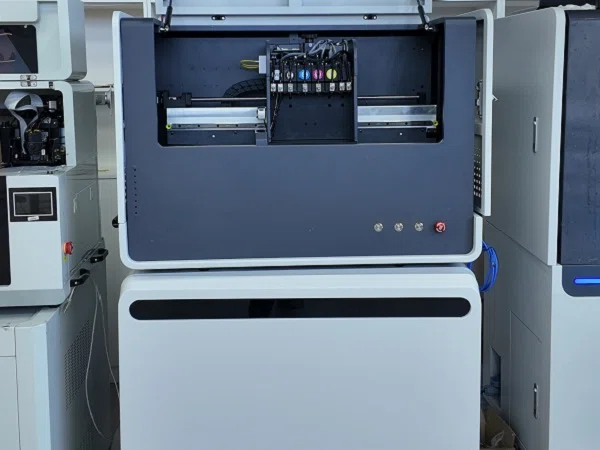
High-end DTG printers comparable to today’s DTF systems typically cost over $400,000 and are difficult to learn, especially in pretreatment, maintenance, and garment restrictions. In contrast, DTF systems streamline the process, completely eliminating the pretreatment step. This step has been effectively replaced by TPU binder powder—which not only simplifies the workflow but also allows for compatibility with multiple garment types through a single print setup.
Ink, Film, and Powder: The Core of DTF Quality
The shift to DTF wasn’t just about hardware; it was also about consumables. Early on, the market relied almost entirely on imported consumables, primarily from China, with limited choices and stringent quality control. Today, there’s a wide variety of ink, film, and powder manufacturers and formulations. While this is a positive development, it has also introduced complexity: almost every supplier claims to offer the “highest quality.” Therefore, it is essential to test consumables before releasing them to the market, or hire a technical consultant to help you find the optimal formulation.
Addressing these claims requires technical due diligence. When evaluating DTF inks, ask the following key questions: Does the ink contain ethylene glycol? Many suppliers will insist it’s just “water-based,” but this is only partially true. Propylene glycol is a fundamental component of almost all pigment-based inks, whether DTF or DTG.
Where is the ink manufactured? Can they provide a Safety Data Sheet (SDS)? Is the ink OEKO-TEX® certified? Check for actual passport certificates.
These are not just marketing credentials; they are indicators of formulation transparency and user safety, especially for apparel used in sensitive applications. This is crucial not only for consumers but also for workflows, print quality, and employee safety.
The film matters—and so does consistency.
Not all DTF films are created equal. One of the most common (and frustrating) problems in the industry today is that distributors quietly replace films to save costs without informing the service team or end-user. This lack of transparency can introduce inconsistencies into your production line and lead to unnecessary troubleshooting.
When evaluating a new film, always ask: Is this particular film always in stock? Has it been recently replaced?
From a production perspective, double matte films are generally the most user-friendly, with an anti-static coating on the back that reduces paper jams and improves the smoothness of operation. However, if your workshop environment is well-controlled (humidity, temperature, and static electricity), glossy films are also a good option—they typically produce a more vibrant and glossy transfer effect.
Understanding DTF Powder Chemistry
Most DTF powders are based on TPU (thermoplastic polyurethane), so the transfer paper often has a plastic-like feel. But there are some alternatives worth exploring:
TPE (thermoplastic polyethylene) powder has stronger adhesion and is ideal for high-end garments. After proper curing, TPE-based transfer materials offer excellent durability and flexibility, with a near-zero failure rate observed in high-end garments.
Whitening powder, or “brightening agent,” is another innovation. These additives can increase the L-value of the white layer by up to 3 percentage points. In the RIP process, when used with a lower proportion of white ink, these powders not only help maintain opacity but also significantly soften the texture of the final transfer.
However, note that whitening powder is very sensitive to humidity—especially above 30%—and if not properly controlled, it can leave a subtle “halo” around the image.
Final Thoughts: Choose Your Partners Wisely
The success of DTF operations depends not only on the printer but also on your supplies and supplier ecosystem. Ensure transparency. Look for suppliers who prioritize consistency, inventory reliability, and technical documentation. With the right inks, films, and powders, and reliable resellers, DTF is not only easier to operate than DTG but also more scalable, flexible, and profitable.